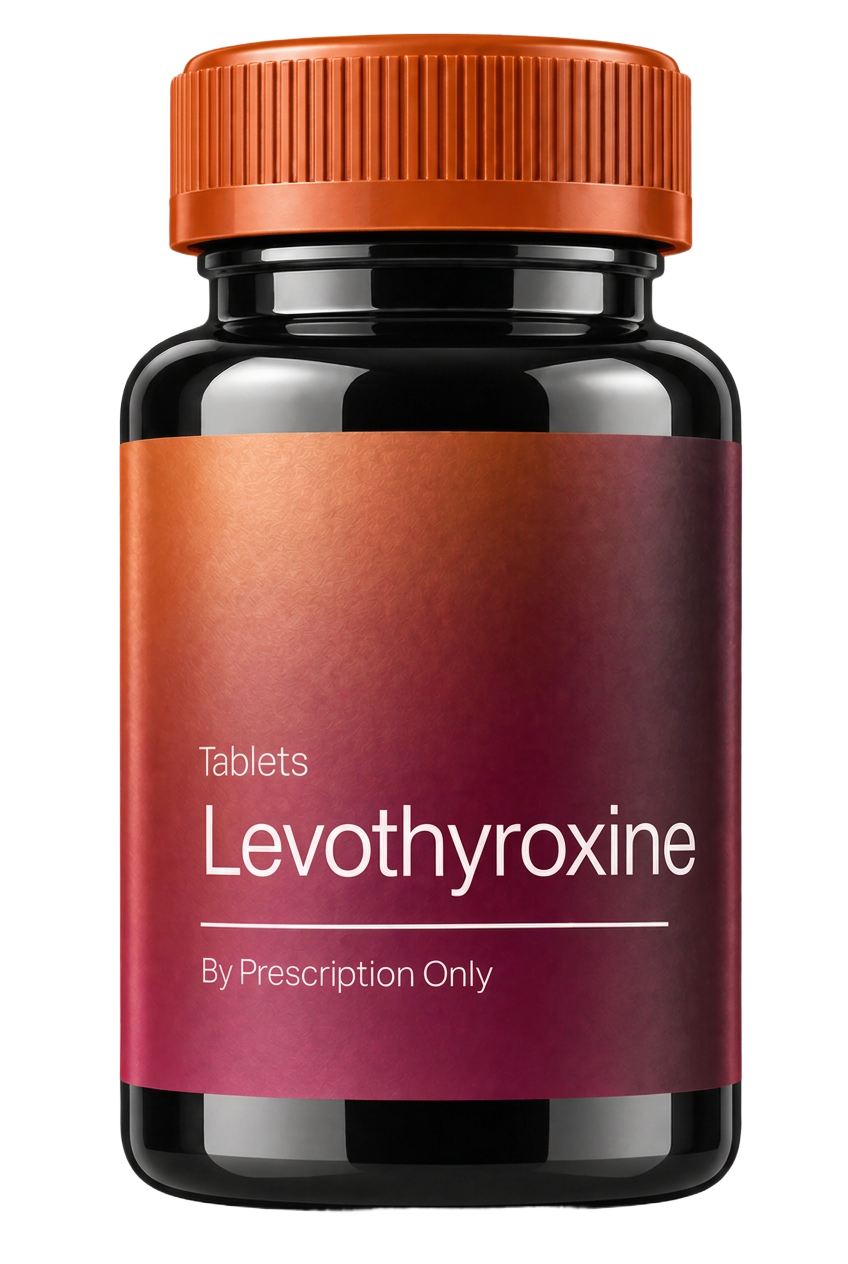
What you’re taking
Liothyronine01 · MechanismLiothyronine T3 Support When Appropriate
Liothyronine provides T3, the more active thyroid hormone, and acts more quickly than Levothyroxine.
It may be considered for carefully selected patients who continue to have significant symptoms despite an adequate Levothyroxine trial, appropriate laboratory values, and evaluation for other causes.
T3 levels can rise and fall more rapidly, so careful dosing, symptom review, and laboratory monitoring are especially important.
The Goal of Treatment
The goal is to replace deficient thyroid hormone, relieve symptoms, and maintain thyroid laboratory values in the individualized target range.
Thyroid hormone should not be used to treat obesity or for weight loss. Excess dosing can cause serious or life-threatening toxicity.
02 · Benefits
What it’s for
01Restores deficient thyroid hormone
02May improve energy and reduce fatigue caused by hypothyroidism
03Supports healthy cognition, mood, and concentration
04May improve cold intolerance, constipation, dry skin, and hair changes
05Supports normal heart, muscle, digestive, and metabolic function
06May help improve cholesterol changes related to untreated hypothyroidism
07Provides individualized dosing based on symptoms and laboratory results
08Includes ongoing physician supervision and monitoring
03 · Timeline
What to expect, and when
• Following dose adjustments:
Improvement may occur gradually over several weeks or months. Hair, skin, bowel, menstrual, cholesterol, and cognitive changes may take longer than early changes in energy or temperature tolerance.
• Long-term therapy:
Many patients require lifelong treatment. Once the dose is stable, periodic laboratory testing and clinical follow-up remain necessary because medication needs can change over time.